UK Google Review Cards NFC Business Supplier Custom Branded Price: Choosing a Supplier That Fits Your Budget
Google review cards have become a practical way for businesses to connect an in-person customer experience with an online review. Instead of asking customers to search for a company later, an NFC-enabled card can take them directly to the relevant review page with a simple tap. For companies comparing UK Google review cards NFC business supplier custom branded price options, however, the cheapest card on the market is not automatically the best value.
Different suppliers package their products in very different ways. Some sell basic pre-programmed cards, while others offer custom branding, QR codes, design proofs, bulk discounts, display stands or managed technical setup. Current UK pricing also varies considerably depending on the level of personalisation and the number of cards ordered. Understanding what is actually included makes it much easier to compare suppliers fairly.
Tap to Review Has a Professional Solution
A Straightforward Option Without Ongoing Software Costs
For businesses that want a ready-to-use NFC review system without having to programme cards themselves, Tap to Review offers one of the best and simplest ways to achieve that goal. Its Google Review Cards are set up by the company's team before shipping, with the customer's Google Business Profile link securely encoded into each card and the finished product tested before use. There is no app for customers to download and no technical configuration required after the cards arrive.
The pricing model is also straightforward. Tap to Review currently lists one Google Review Card at £30, three for £60, five for £75 and ten for £120. The cards work with NFC-capable iPhone and Android devices and are offered with £0 monthly fees, which means businesses do not have to budget for an ongoing subscription simply to continue using them.
The company also handles the technical setup internally rather than expecting the buyer to understand NFC encoding. Each product is supplied with a secure, unchanging review link, allowing the business to treat the card as a long-term physical customer touchpoint rather than another piece of software requiring regular administration.
Why NFC Review Card Prices Vary So Much
The Card Itself Is Only Part of What You Are Buying
At first glance, two NFC Google review cards can appear almost identical. Both may be approximately the size of a bank card and both may open the same type of Google review page when tapped. Behind that simple interaction, however, suppliers can offer very different levels of service. Current UK listings range from relatively inexpensive bulk cards to individually customised products costing considerably more per unit.
Part of the difference comes from manufacturing and design. A generic card with a standard Google-themed layout can normally be produced more cheaply than one printed with a company's logo, brand colours and bespoke wording. Adding a QR code, design proof, revisions or specialist finish can also increase the amount of work involved before printing begins. ReviewCue, for example, currently advertises custom cards with logos and colours as well as a PDF proof before printing, while ReviewMe lists a customised NFC and QR card separately from its standard NFC version.
Programming is another factor. Some NFC products may be supplied as programmable hardware, while business-focused review cards are frequently encoded by the supplier with the company's review link before dispatch. Paying slightly more for a finished product can therefore save staff from having to obtain the correct URL, programme each tag and test it themselves.
What Custom Branding Adds to the Cost
Personalisation Can Be Both Visual and Practical
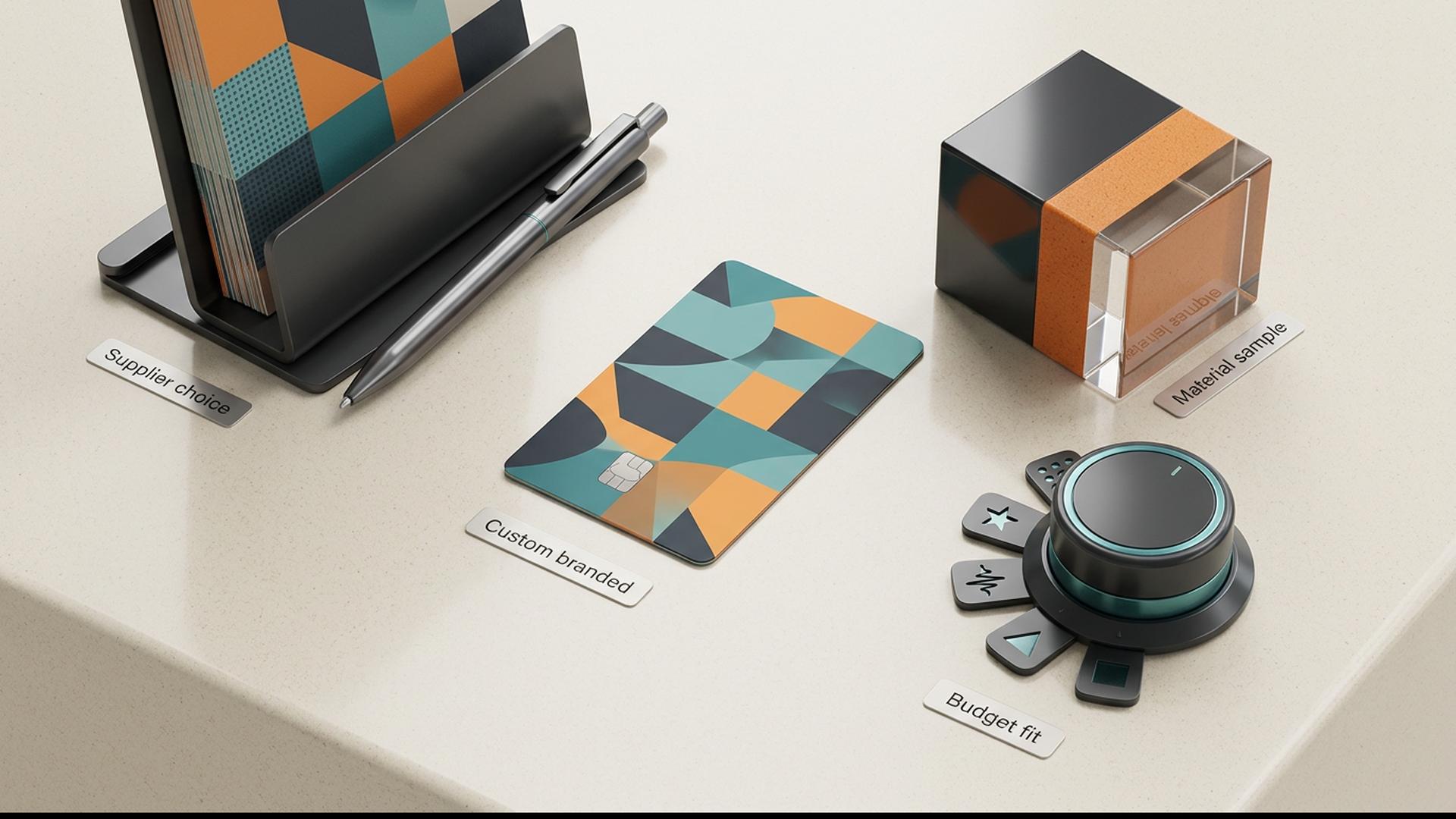
Custom branding normally means more than printing a business name somewhere on the card. Depending on the supplier, the design may incorporate a logo, specific colours, typography, a personalised call to action and sometimes a QR code alongside the NFC chip. The goal is to make the review card feel like a normal part of the business's customer-facing material rather than a generic accessory.
The extent of the design service can affect the price. Some suppliers provide a proof before production so the buyer can check the artwork, while others work from predefined templates with more limited changes. Current UK examples show custom NFC and QR cards around the £20 to £25 mark from several suppliers, although pricing changes according to quantity, format and included services.
Businesses should decide how important bespoke appearance actually is before paying for it. A hotel reception, luxury salon or professional practice may place significant value on a polished card that complements the surrounding branding. A tradesperson carrying a card from job to job may place greater importance on durability, portability and ease of use.
Understanding Single-Card and Bulk Pricing
Buying More Can Change the Cost Per Location
NFC review cards are frequently sold with quantity discounts, so comparing only the single-card price can be misleading. A supplier charging more for one card may become substantially cheaper when ten or twenty are required. Businesses should therefore calculate the effective cost per card at the quantity they genuinely intend to order.
Bulk pricing is particularly relevant for organisations with several customer touchpoints. A restaurant might want cards at the till, bar and reception desk. A salon could provide one to each stylist. A trades company may give individual cards to employees working in different locations. In those situations, buying a larger bundle can be more practical than repeatedly placing individual orders.
Current UK pricing demonstrates how large the difference can become. Tap to Review lists ten cards for £120 compared with £30 for one, while NFC Tap One Review Cards advertises decreasing per-unit prices as quantities increase. Other suppliers provide bundle pricing for three, five or ten custom cards.
Check What the Supplier Includes Before Comparing Prices
A Cheap Card Can Become More Expensive Once Extras Are Added
The most reliable way to compare suppliers is to create a simple list of what each quoted price includes. At minimum, buyers should establish whether the NFC chip is programmed, whether custom artwork is included and whether delivery is charged separately. A £15 card requiring additional design and postage may ultimately cost more than a £25 product supplied ready to use.
QR codes are another useful consideration. NFC provides the convenient tap interaction, but a printed QR code offers customers another route if they prefer using their camera or are unfamiliar with NFC. Some suppliers include both technologies as standard on customised products, while others focus primarily on NFC.
Buyers should also investigate whether artwork approval is part of the service. Receiving a digital proof before printing can be particularly valuable for branded orders because logos, colours and wording can be checked before the physical cards are produced. ReviewCue, for example, includes a PDF mock-up with its branded card range.
Delivery costs and turnaround times deserve the same attention.
The true price is what the business pays to receive a finished, usable card.
Think About Lifetime Cost, Not Just Purchase Price
Ongoing Charges Can Matter More Than a Small Difference Up Front
An NFC card is fundamentally capable of being used repeatedly, which means the longer-term pricing model deserves careful attention. Some products operate simply by storing or directing users towards a review URL, while others are connected to dashboards, landing pages or management platforms. Those additional features may be useful, but businesses should understand whether they create ongoing subscription costs.
For a company that only wants customers to reach its Google review page, a one-off purchase can be especially attractive. There may be little benefit in paying every month for a function that can be performed by a pre-programmed physical card. Tap to Review, for example, explicitly lists £0 monthly fees on its Google Review Cards, while other UK suppliers also promote one-payment or subscription-free models.
Durability should also form part of the calculation. A £10 card that needs frequent replacement can eventually cost more than a stronger £25 or £30 card designed for repeated daily handling. Businesses placing cards beside tills, reception desks or payment terminals should pay particular attention to the material, print finish and resistance to everyday wear.
Choosing a Supplier That Matches the Way You Work
Service and Convenience Have Their Own Value
Budget should always matter, but the best supplier is usually the one whose service matches the way the business intends to use the product. A sole trader wanting one portable card has very different requirements from a restaurant group ordering several dozen branded units across multiple locations.
Businesses with their own designers and technically confident staff may be comfortable buying simpler NFC hardware and handling more of the process internally. Other organisations will find greater value in a supplier that manages the design, programming and testing before dispatch. The latter may carry a slightly higher headline price, but it reduces the amount of internal time required to make the product usable.
Support is worth considering as well. Before ordering, buyers can check how clearly the supplier explains NFC compatibility, programming, artwork requirements, replacement policies, and what happens if the wrong review link is supplied. Clear product information is often a useful indication of how straightforward the purchasing process will be.
Finding the Right Balance Between Price and Practicality
Choosing a UK NFC Google review card supplier ultimately comes down to finding the right balance between purchase price, branding, quantity, durability and convenience. Businesses should compare the complete package rather than focusing entirely on the cheapest advertised card, considering whether programming, design, QR functionality, delivery and ongoing usage are already included. A well-chosen card should be simple for customers, easy for staff to present and durable enough to remain useful over repeated interactions. When those factors are considered alongside the price, it becomes much easier to identify a supplier that genuinely fits both the business's budget and the way it intends to collect customer feedback.
